
HESLO
RotorSky
Training in helicopter external sling load operations qualifies you to safely handle loads transported outside the helicopter. Whether for material transport in inaccessible terrain, disaster relief operations, or industrial applications – the use of external loads requires specialized knowledge, precise coordination, and the highest safety standards.
Goals
Our practical training provides all the necessary knowledge and skills to work safely and efficiently as ground crew on external load flights. The HESLO training is progressive, starting with simple external loads on shorter lines and progressing with increasing experience to 60-meter lines and more complex external loads. After completing the HESLO training, you can begin HEC (Human External Cargo) training at an airline.


Basics
The training is aimed at civilian, military, and governmental organizations that handle air transport tasks (supplying alpine pastures, logging in inaccessible terrain, rescues, etc.). For the safe and efficient execution of the mission, goal-oriented communication between pilots and flight crew is essential. Optimal workload management also contributes significantly to mission success.
theory
The theoretical training covers the safety-related and technical fundamentals of external load operations. Topics include:
• Fundamentals of helicopter technology and flight physics in relation to external loads
• Types of operations and load types
• Regulations, guidelines, and responsibilities
• Safety distances and communication protocols
• Risk analysis and emergency procedures
• Materials science: rigging equipment, load distribution, and fastening techniques
All participants receive comprehensive training materials and have the opportunity to discuss practical questions with experienced instructors.

.jpg)
Practice
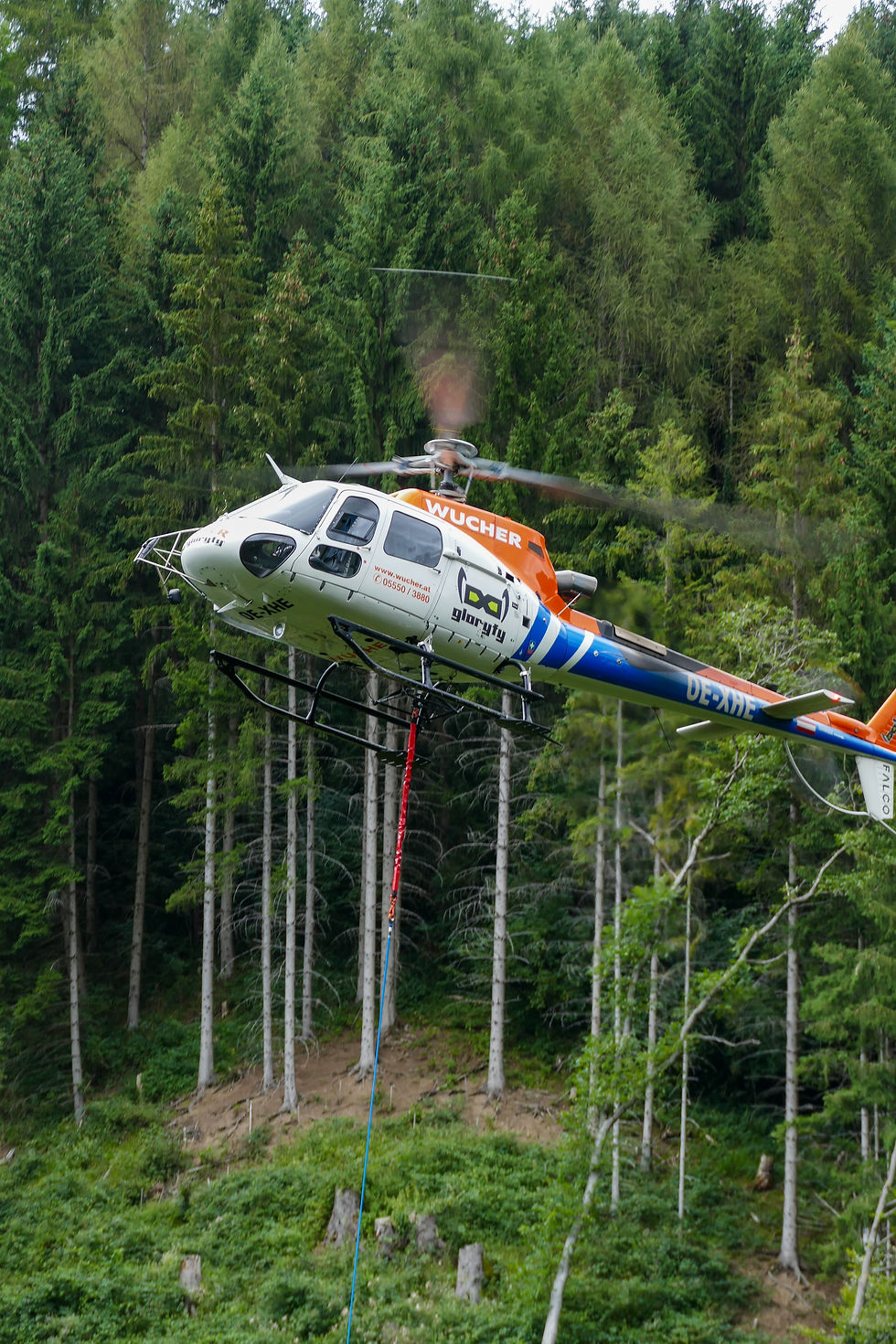
The practical training currently focuses on helicopter training with a wide variety of external loads and missions. These are designed to be progressively challenging, ensuring optimal training success. Equally important is learning appropriate observation techniques to fully assess the situation at any time and determine the next steps accordingly.